
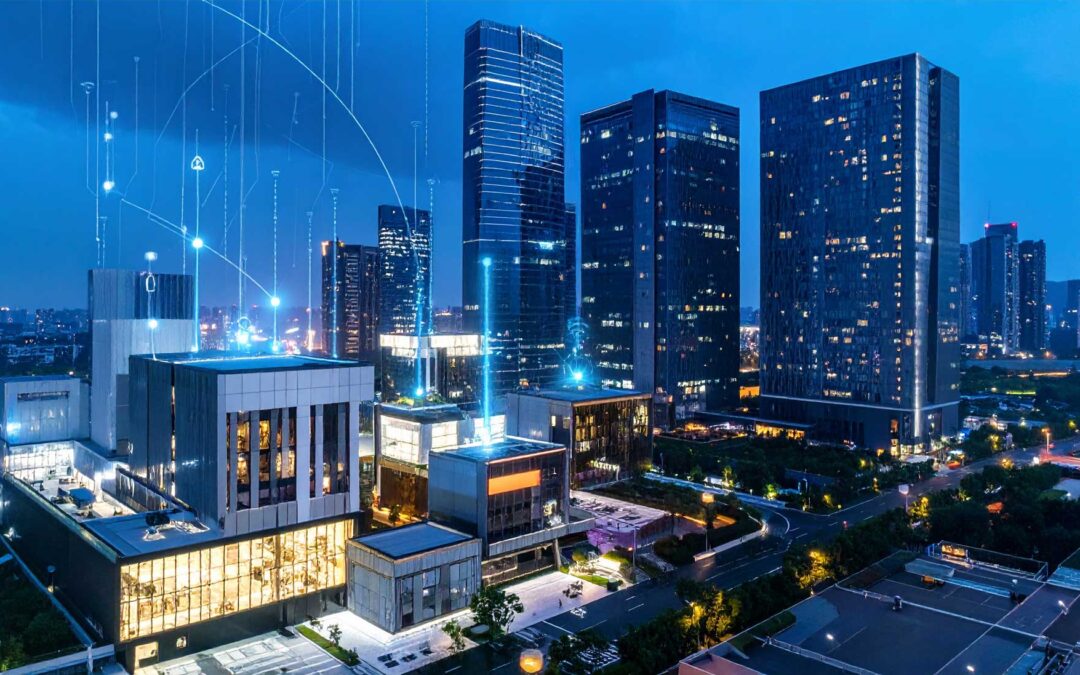
As technology continues to transform the built environment, smart buildings are quickly becoming standard rather than the exception-especially in Southern California’s fast-evolving commercial real estate market. But what exactly defines a smart building, and what’s coming next?
What Are Smart Buildings?
Smart buildings use interconnected digital systems to automate and optimize key operations, including:
- Energy usage (HVAC, lighting, and renewable systems)
- Security and access control
- Occupant comfort and experience
- Maintenance and performance analytics
Behind the scenes, sensors, Internet of Things (IoT) devices, artificial intelligence (AI), and cloud-based platforms work together to create buildings that are more efficient, responsive, and data-driven.
Why Southern California Is Positioned for Smart Building Growth
Southern California sits at the intersection of sustainability, innovation, and urban expansion, making it a prime environment for smart building adoption.
Sustainability Requirements Are Increasing Cities across the region.
Smart buildings help property owners:
- Monitor real-time energy performance
- Automatically optimize energy consumption
- Integrate solar power and energy storage systems
This goes beyond sustainability—it’s essential for compliance and long-term cost savings.
Rising Tenant Expectations
Modern tenants expect more from commercial spaces. This includes:
- Personalized climate and lighting controls
- Mobile and contactless access
- Improved indoor air quality
- Predictive maintenance alerts before issues arise
Smart technology enables a more seamless and responsive occupant experience.
A Strong Regional Tech Ecosystem
With innovation hubs in Los Angeles, Irvine, and San Diego, Southern California fosters collaboration between technology companies and real estate developers. This results in faster innovation cycles, smarter analytics, and scalable deployment across commercial portfolios.
Smart systems are evolving from reactive automation to predictive intelligence. Future capabilities include:
- Predictive energy optimization based on weather, occupancy, and utility signals
- Automated fault detection and diagnostics
- Dynamic scheduling based on real-time usage patterns
Ultra-Connected Infrastructure (5G and Edge Computing)
Advanced connectivity will support:
- Real-time data processing from thousands of sensors
- Augmented reality tools for maintenance and operations
- Seamless mobile integration for occupants
In dense areas like downtown Los Angeles, this connectivity enables entirely new service capabilities.
Integration with Clean Energy Grids
Smart buildings will increasingly interact with the broader energy grid by:
- Participating in demand response programs
- Managing on-site solar and battery storage systems
- Operating as part of virtual power plant networks
These capabilities not only improve grid stability but can also generate additional revenue streams for property owners.
Human-Centered Design
The next generation of smart buildings will prioritize occupant well-being through:
- Continuous indoor air quality monitoring
- Personalized temperature and lighting preferences
- Data-driven space utilization
Enhanced Security Technologies
Security systems are also becoming more intelligent, incorporating:
- Biometric and mobile-based access control
- AI-powered video monitoring
- Adaptive threat detection systems
What This Means for Investors and Developers
Smart building technology is no longer a luxury—it’s a strategic investment. It helps reduce operating costs, improve tenant satisfaction, increase asset value, and ensure compliance with evolving regulations.
For developers and investors in Southern California, adopting smart technology provides a measurable competitive advantage in an increasingly sophisticated market.
To learn more about ongoing developments and initiatives, visit https://creedla.com.