
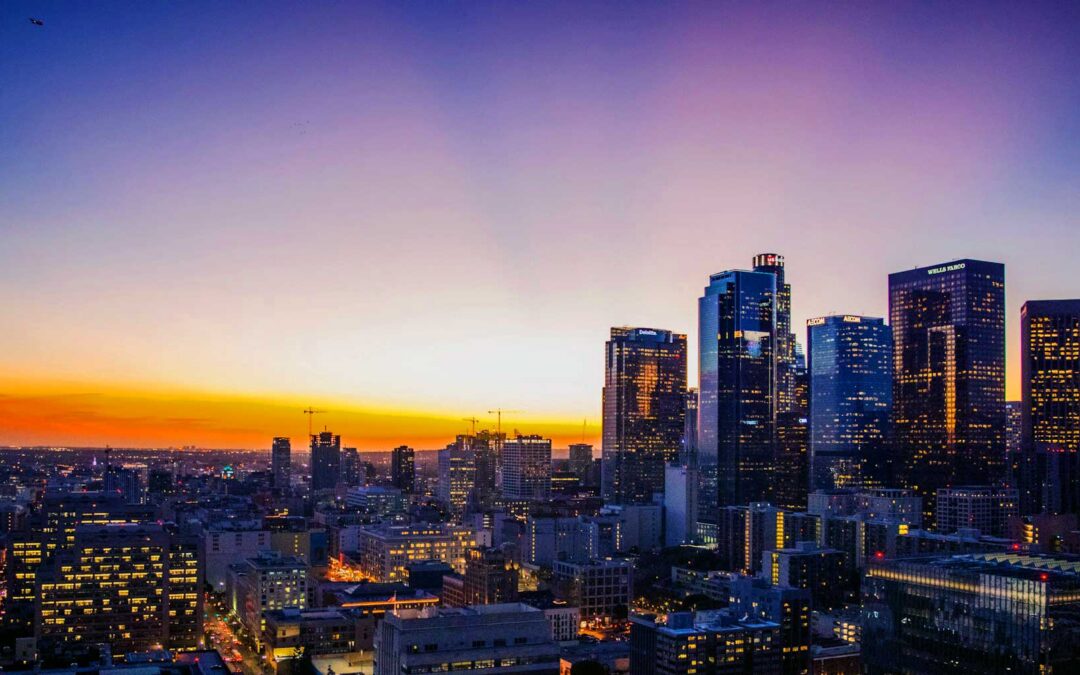
Southern California is known for its sun-soaked beaches and sprawling suburbs, but its skyline tells a powerful story of innovation, ambition, and economic growth. Over the decades, a handful of commercial projects have reshaped the region’s urban identity, setting new standards for architecture, sustainability, and mixed-use development.
Five iconic Commercial Projects That Define Southern California’s Skyline.
1. U.S. Bank Tower – Formerly known as the Library Tower, the U.S. Bank Tower has long been the tallest building in Los Angeles and a defining feature of the downtown skyline. Completed in 1989, this 73-story skyscraper symbolizes the city’s rise as a global business hub.
Beyond its height, the tower represents a shift toward vertical growth in a region historically known for urban sprawl. Its sleek, cylindrical design continues to stand out among newer developments.
2. Wilshire Grand Center – Completed in 2017, the Wilshire Grand Center redefined what modern skyscrapers could look like in Southern California. With its distinctive spire and glass façade, it broke away from the flat-roofed design typical of LA high-rises.
The project also introduced a new era of mixed-use vertical space, combining offices, retail, and the InterContinental Hotel.
3. Staples Center (Crypto.com Arena) – Opened in 1999, this world-class arena (now known as Crypto.com Arena) transformed downtown Los Angeles into a premier entertainment destination. Anchored by major sports teams and global events, it sparked the development of the surrounding L.A. Live district.
This project proved that commercial development is not just about office towers, it can also center around entertainment and lifestyle. This project has revitalized Downtown LA’s economy. attracted restaurants, hotels, and retail developments, as well as positioning LA as a global entertainment capital.
4. Transamerica Pyramid (San Francisco) – While technically outside Southern California, the Transamerica Pyramid has had a profound influence on commercial architecture across the state. Its bold, futuristic design inspired developers throughout California, including SoCal, to think more creatively about skyline aesthetics.
5. Irvine Spectrum Center -not all skyline-shaping projects reach for the clouds. The Irvine Spectrum Center demonstrates how horizontal, mixed-use developments can redefine commercial space. Combining retail, entertainment, and office environments, it has become a model for suburban economic hubs.
Its iconic Giant Wheel and vibrant layout make it a recognizable landmark in Orange County. It created a live-work-play environment and became a major economic driver in Orange County
Final Thoughts
Southern California’s skyline is more than a collection of buildings, it is a reflection of shifting priorities, economic cycles, and cultural evolution. From the vertical ambition of U.S. Bank Tower to the modern, mixed-use innovation of Wilshire Grand Center, each project represents a moment when developers, architects, and city planners pushed the boundaries of what commercial space could achieve.
What is especially notable is how these developments go beyond aesthetics. Projects like Staples Center (Crypto.com Arena) demonstrate the power of experience-driven design – where entertainment, hospitality, and commerce intersect to create economic ecosystems rather than standalone structures. Meanwhile, destinations such as Irvine Spectrum Center highlight a growing emphasis on lifestyle integration, where people can work, shop, dine, and socialize in one cohesive environment.
Looking ahead, the next wave of skyline transformation in Southern California will likely be driven by sustainability, smart technology, and adaptive reuse. Developers are increasingly focused on
energy-efficient systems, green building certifications, and designs that reduce environmental impact while maximizing long-term value. At the same time, older commercial properties are being reimagined to meet modern demands, turning underutilized spaces into vibrant, multi-purpose destinations.
For business owners, investors, and contractors, these trends signal opportunity. The evolution of Southern California’s commercial landscape is not just about iconic landmarks, it is about creating spaces that are resilient, functional, and aligned with how people live and work today.
In the end, the skyline will continue to change but its purpose remains constant: to tell the story of a region that thrives on innovation, reinvention, and bold vision.
CREED LA is a non-profit alliance of labor focused on environmental development plans that conform to state and local laws in Southern California. For more information on LA Creed’s continuing endeavors to positively impact your community visit https://creedla.com.