
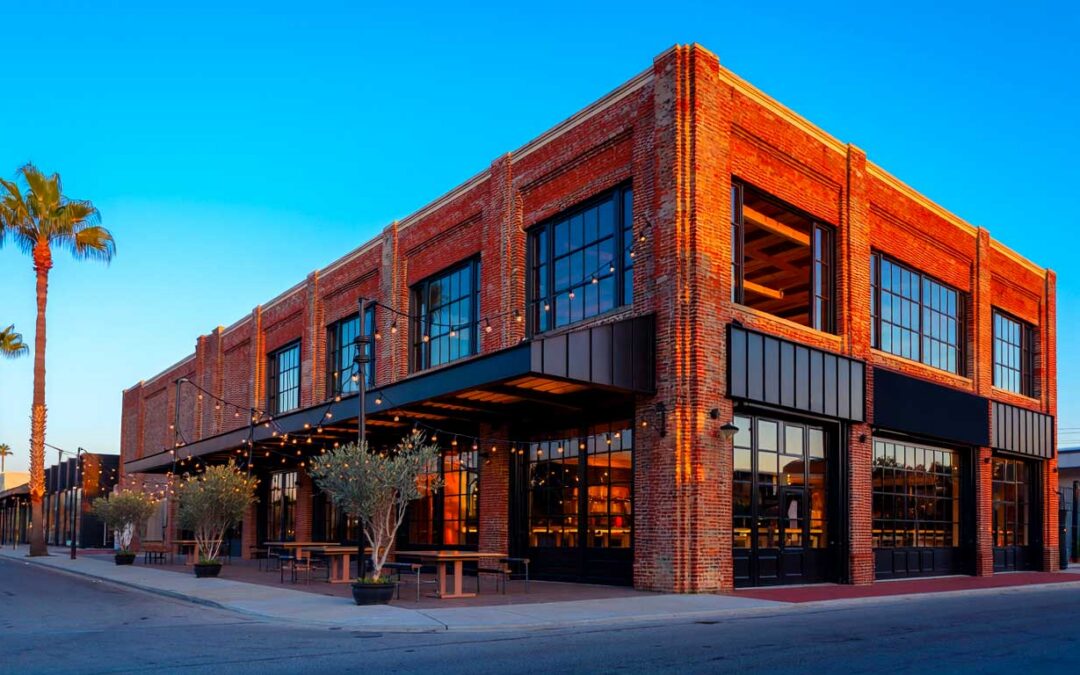
A former warehouse becomes a neighborhood restaurant. An aging office building gains new life as flexible workspace. Across Southern California, developers are finding opportunities in buildings that already exist rather than automatically clearing sites for new construction. This approach, known as adaptive reuse, can preserve a property’s distinctive character while making it useful for today’s businesses and communities.
Adaptive reuse is not simply a cosmetic renovation. It involves adapting an existing structure to a new purpose or substantially different requirements, often while upgrading building systems, accessibility, and safety. Done thoughtfully, it can connect economic development with environmental stewardship and neighborhood identity.
Preserving Character While Making Space for Modern Uses
Older commercial and industrial buildings often have architectural qualities that are difficult to recreate: exposed brick, generous ceiling heights, substantial windows, and distinctive structural details. Retaining these elements can give a renovated property a sense of place that sets it apart from conventional new construction.
Character alone, however, is not enough. A successful conversion may require redesigned floor plans, updated electrical and plumbing systems, modern HVAC equipment, improved accessibility, and technology infrastructure. The objective is to preserve what makes a building valuable while addressing the practical needs of its next occupants.
For Southern California businesses, that flexibility can open the door to creative offices, hospitality venues, retail spaces, and mixed-use destinations in established neighborhoods.
The Sustainability Case for Reusing Existing Buildings
Demolition and new construction consume materials and generate waste. By retaining usable portions of a building, an adaptive reuse project may avoid some of those impacts and conserve resources already invested in the structure. The U.S. Environmental Protection Agency identifies reducing construction and demolition material waste as an important part of sustainable materials management.
For background on construction and demolition materials, see the U.S. Environmental Protection Agency.
Environmental benefits are not automatic. They depend on how much of the original structure can be retained, the materials required for renovation, and the building’s long-term energy performance. A project that preserves an existing shell but leaves inefficient systems untouched may miss an important opportunity.
Upgrades such as efficient heating and cooling, improved insulation, water-saving fixtures, smart controls, and high-performance glazing can help older properties better meet current expectations. Owners should evaluate these improvements alongside project costs and building-specific constraints.
Responding to Changing Commercial Needs
Businesses need spaces that can accommodate changing teams, customer expectations, and technology. Adaptive reuse allows developers to reconsider how an existing property functions without necessarily starting over. A former industrial facility, for example, may offer the open layout needed for a restaurant or collaborative workplace, while an older office property may support a different mix of uses after a careful redesign.
Location can be just as important as architecture. Some older buildings sit within established commercial districts, close to existing transit connections, services, and surrounding businesses. Reinvestment in those properties can contribute to neighborhood activity without requiring development to move farther outward.
What Makes Adaptive Reuse Challenging?
Working within an existing building introduces uncertainties that a new project may not face in the same way. Structural conditions, seismic performance, outdated mechanical systems, hazardous materials, accessibility requirements, zoning, and historic preservation rules can all affect what is feasible.
In Southern California, seismic considerations deserve particular attention. The scope of required upgrades depends on the building, proposed use, and applicable local requirements; there is no single retrofit solution for every property. Early assessments by qualified architects, engineers, and other specialists help identify limitations before major design and construction decisions are made.
Project teams must also consider whether the intended new use triggers different occupancy, fire-safety, or accessibility obligations. A realistic budget should account for investigation, permitting, and potential surprises uncovered during renovation.
A Practical Direction for Southern California Development
Adaptive reuse is likely to remain an important option as Southern California balances growth with environmental priorities and the desire to preserve neighborhood character. It is not the right answer for every aging property, and some buildings may require investments that make reuse impractical. Where the conditions align, however, it offers a way to modernize commercial space while making thoughtful use of existing resources.
The broader lesson is that responsible development is not measured only by what gets built from the ground up. It also includes how communities maintain, improve, and repurpose the places they already have.
To learn more about Creed LA’s work and perspective on responsible development in Southern California, visit Creed LA.